Why are we frightened of reincarnation?

Ever-Flowing Streams: Tapping into Healing Energy

Chapter 9

Reincarnation

This excerpt is Part II in a series on reincarnation:

I know who I was when I got up this morning, but I think I must have changed several times since then.–Alice in Wonderland

Born Again?

Great minds and mystics have grappled with the theory of reincarnation for eons. The modern Christian church dismisses the concept. The party line is that we are born once; we have the option of accepting Jesus Christ as our Lord and Savior for our ticket to heaven; if we don’t, we are condemned to hell. This interpretation of scripture promotes church membership quite effectively.

But looking historically and globally, I found that reincarnation has been embraced by cultures far and wide. Even the Bible retains passages that allude to it. Besides the reference above from Matthew naming John the Baptist and Elijah as the same soul, Jesus seemed to convey the concept in several references:

John 8:58–Truly, truly, I say to you, before Abraham was, I am.

Luke 9:18-20–“Who do the people say that I am?” And they answered, “John the Baptist; but others say Elijah; and others, that one of the old prophets has risen.”

John 9:2—As he went along, he saw a man blind from birth. His disciples asked him, “Rabbi, who sinned, this man or his parents, that he was born blind?”

If you take the above passages at face value, it appears there was a cultural acceptance of the idea that souls return to the earthly plane. Clearly, the people of the time exhibited a belief in reincarnation if they conjectured Jesus might be the returning spirits of Elijah or an Old Testament prophet.

Also implied in the last quotation is an understanding of karma, the cosmic law of cause and effect. Who sinned, this man or his parents that he was born blind? The question indicates a belief that a child born blind could be the result of previous misdeeds.

Other scriptures point to a karmic philosophy:

Whatsoever a man soweth, that shall he also reap-Galatians 6:7

Do unto others what you would have them do to you—Matthew 7:12

All who draw the sword will die by the sword—Matthew 26:52

Theologians have argued these passages for two thousand years. One of the earliest and most respected was Origen of Alexandria who lived from 185-254 A.D. According to the Internet Encyclopedia of Philosophy, he believed in the “pre-existence and fall of souls; multiple ages and transmigration of souls; and the eventual restoration of all souls to a state of dynamic perfection in proximity to the godhead.” Quite the metaphysician, Origen. He devoted his life to teaching and writing his Christian beliefs until the Roman Emperor of the day ordered a purging of the followers of Christ. Origen was martyred in Tyre.

The debate continued for another two hundred years until the church grew into a political institution. According to Life Between Life by Joel L. Whitton, Ph. D, “The new Church-State alliance, aiming for the cultivated dependence of the masses, felt threatened by those who believed in rebirth because such Christians tended to be self-reliant, free-thinking individuals whose subservience could not be guaranteed.”

In 553 A.D., the Fifth Ecumenical Council condemned Origen’s theories as heresy (the root definition meaning “able to choose”).  Emperor Justinian formally denounced the concept of rebirth in no uncertain terms:

If anyone assert the fabulous pre-existence of souls and shall assert the monstrous restoration which follows from it: let him be anathema

Wow–let him be anathema– as in a “person or thing accursed or consigned to damnation or destruction.” [1]

Zealous church leaders followed up that dictate by slaughtering a half million reincarnation-believing Cathars in Southern France during the 1200’s. Not satisfied with that carnage, the Inquisition was born.

Carol Bowman sums up the legacy of such repression in Children’s Past Lives thus:

The murderous efficiency of the Inquisition proved effective. The persecution by the institutional Church has scarred our collective psyche, and it has surrounded us with an invisible fence dividing what is safe from what is dangerous to believe. Since then, people who harbor forbidden ideas have learned to keep their thoughts to themselves. Our cultural memory still carries the fear of reprisal for publicly associating with any occult practices, the use of psychic powers or a belief in reincarnation.

Consequently, believers in reincarnation were effectively wiped out or muzzled. In time, the masses of the West generally forgot about it. The day-to-day struggle to survive and the poor education of the eras erased reincarnation concept from cultural memory.

History marched on—the Renaissance, the split of church by the Reformation, and the Industrial Revolution transformed the West, but reincarnation did not figure into the world-view paradigm. And maybe that was a good thing.

End of excerpt

All of Chapter 9 is available to read at Scribd.com
Tapping400Ever-Flowing Streams: Tapping into Healing Energy is available at:

Ebook Amazon.com

Paperback  Lulu.com 
© 2010 by Dana Taylor
All rights reserved


Christianity and Reiki

There are the sayings, “like attracts like” and “birds of a feather flock together.” I’ve found in my Reiki practice and the responses to Ever-Flowing Streams: Christ, Reiki, Reincarnation and Me that I am attracting people grounded in a Christian tradition, but willing to think outside the box. Much of Ever-Flowing Streams chronicles my pursuit of knowledge about energy healing within the Christian culture. Can a Christian comfortably visit or become a Reiki therapist? Let’s get some perspective on the issue.

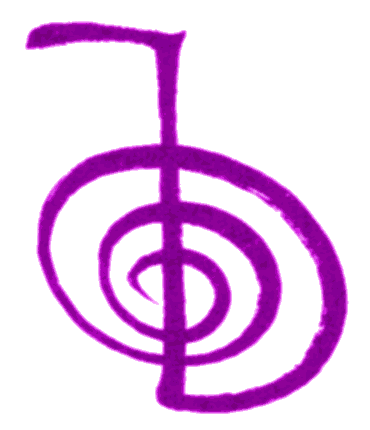
Reiki_Symbol

  • Reiki is not a religion. People of many religious affiliations or no religious affiliations are participating in the energy healing movement. Its roots come from Japan and an Eastern world view, but it is utilizing universal energies—like electricity.
  • Are there “magic” symbols? The symbols in Reiki have specific meanings and many are Japanese words or phrases. They are used as meditation focus points to enable the practitioner to concentrate a healing intention, such as sending distance healing. The idea of “magic” is primarily a Western concept that arises from Occult activity. Reiki symbols are more akin to mediating and quieting the mind toward a certain goal. Reiki symbols are part of Sacred Geometry, carrying healing energetic frequencies.
  • Where does the healing power come from? The same question was asked of Jesus Christ when he walked the earth and healed the multitudes. Some accused him of being in league with the Devil. He knew how to use the universal healing energies in a very efficient manner. I began studying energy healing within the church and simply kept learning. The Reiki energies come from another dimension, unseen to the human eye, but quite real. As humans evolve and become multi-sensory, access to these energies and the intelligence behind them will become more common.

Personally, I consider myself a follower of Christ and the expansion into energy work is a further manifestation of living out my spiritual path. However, I don’t press my religious beliefs on clients.  Energy work encompasses transmitting healing vibrations into the subtle (energetic ) body of the client. The practitioner may also pick up information, such as sensing that an organ is stressed, like a low thyroid. The energies emitted are utilized by the client to the best of their ability to assimilate it. None of this activity is tied to a religion. For more information about Christianity and Reiki, visit http://www.christianreiki.org/ and The International Center for Reiki Training

EverF  Join the Supernal Adventure!

“Tattoos on the Heart,” My Favorite Book

Tattoos on the Heart: The Power of Boundless Compassion

Taylor email 03 Review by Dana Taylor

“His ways are not our ways…but they sure could be.” 

Tattoos on the Heart author Gregory Boyle, aka Father Gregory Boyle, founder of Homeboy Industries and long-time priest of the Delores Mission in Los Angeles, aka “G-dog”, sums up his approach to life in that simple, but profound, phrase. Father Boyle has been honored with numerous awards, including the California Peace Prize, and even brought gang members to dinner at the White House. A bout of leukemia prompted him to finally write a book inspired by his twenty-five years ministering at the ground zero of gangland—Boyle Heights of Los Angeles. Tattoos on the Heart: The Power of Boundless Compassion is my new favorite book and it will take something pretty special to bump it off the top of my list.

It hit me on so many levels.  First, the writing style—there’s a dose of barrio homeboy vernacular to make it real.  A homegirl acting as receptionist answers a bomb threat with “Go ahead and bring that bomb, motherfucka. We’re ready for your ass.” (Christian publishers passed on the book because of those moments.) Then, in the next paragraph Boyle might quote Thomas Merton or a Catholic saint.  He uses so many different colors to paint the palette of his book.

Next, the content is the stuff of inspiring sermons—spiritual lessons couched in anecdotal stories of the homies. Rather than writing a chronological autobiography G (as he most often is called) offers chapters that focus on the gifts of the spirit—Grace, Compassion, Gladness, Kinship. He makes the barrio come alive through the eyes of man who sees the value in people who can’t see the value in themselves. This isn’t a Disney-like portrayal of the happy mean streets. His heart has been broken by the 167 times he’s buried the homeboys because of senseless violence.

 Yet, there is hope because he knows who the Savior is.  He sees Him in every scary, tattooed ex-con who comes through the doors of Homeboy Industries. G knows the Boundless Compassion of God and does his best to pay it forward.

Father Boyle lives among the angry, the marginalized, the under-educated throwaways of society and shows them God’s love. Indeed, his ways are not our ways…but they sure could be.

If you read it, Tattoos might turn into your favorite book also.

Tattoos on the Heart: The Power of Boundless Compassion by Gregory Boyle

****

Ever-Flowing Streams: Christ, Reiki, Reincarnation & Me

   “A book not just to read, but to experience”–Tampa Bay Examiner

Available as ebook and paperback at Amazon